
Using Tree of Heaven as a Trap Tree for Spotted Lanternfly
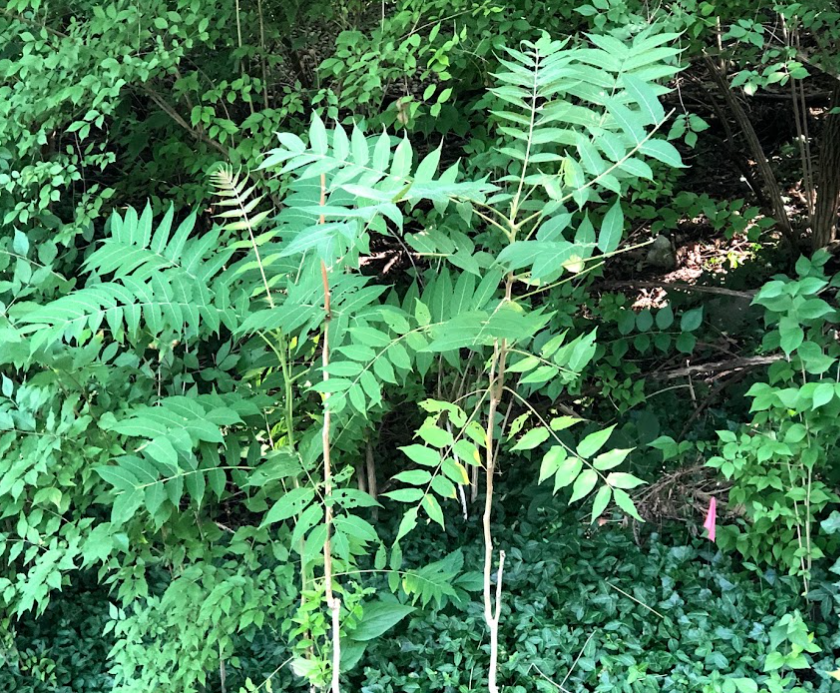
A practical, targeted approach for concentrating and reducing spotted lanternfly populations in the landscape
Spotted lanternfly, Lycorma delicatula, continues to expand through Ohio and other eastern states, creating concern for homeowners, vineyard managers, orchardists, municipalities, and green industry professionals. Although this invasive planthopper feeds on many plants, one host stands out above all others: tree of heaven, Ailanthus altissima. Because spotted lanternfly is highly attracted to this invasive tree, carefully retaining and treating selected tree of heaven stems can sometimes be used as a trap tree strategy. The objective is not to preserve tree of heaven as a desirable landscape plant, but to use the insect’s strong attraction to it against the pest.
Why Tree of Heaven Attracts Spotted Lanternfly
Tree of heaven is a fast-growing, invasive deciduous tree native to Asia. It has become established in disturbed sites, roadsides, alleys, fence rows, urban lots, wooded edges, and unmanaged landscape areas. Spotted lanternfly is also native to Asia, and its biology is closely associated with tree of heaven. Nymphs and adults will feed on many hosts, but tree of heaven is one of the most preferred and suitable hosts, especially for later nymphal stages and adults.
When tree of heaven is present, spotted lanternflies often congregate on the trunks, stems, and branches in large numbers. This behavior makes tree of heaven useful for monitoring infestations and, in some cases, for targeted control. Rather than attempting broad insecticide applications across many landscape plants, a trap tree approach concentrates insect activity on a small number of selected trees that can be treated more strategically.
What Is a Trap Tree?
A trap tree is a deliberately retained host plant that attracts a target pest and is then treated so that feeding insects are killed. For spotted lanternfly, the trap tree is typically a living tree of heaven. The tree is treated with a systemic insecticide that moves into the sap. When spotted lanternflies insert their piercing-sucking mouthparts into the treated tree and feed on the sap, they ingest the insecticide and die.
This approach differs from simply cutting down every tree of heaven on a property. Removing tree of heaven is an important long-term invasive plant management goal, but immediate removal of every stem may disperse spotted lanternflies to grapevines, black walnut, maples, fruit trees, ornamentals, or neighboring properties. A trap tree program generally removes most tree of heaven stems while retaining a limited number of healthy, accessible stems to attract and kill spotted lanternflies.
Step 1: Confirm That the Tree Is Tree of Heaven
Correct identification is essential. Tree of heaven is often confused with black walnut, Juglans nigra, and native sumacs, Rhus species. Tree of heaven typically has very large, pinnately compound leaves with many leaflets. The leaflets usually have mostly smooth margins with one or more glandular teeth near the base. Crushed foliage, twigs, or bark often produce a distinctive unpleasant odor. Female trees produce clusters of winged seeds called samaras. Because several native and desirable plants can look similar at a glance, uncertain identifications should be confirmed before any treatment or removal is performed.
It is also important to recognize that tree of heaven itself is invasive. The goal is to use only selected stems temporarily or strategically, not to encourage the tree to spread. Female seed-producing trees and dense colonies should be managed carefully to prevent further reproduction and root suckering.
Step 2: Remove Excess Tree of Heaven and Retain Selected Trap Trees
A trap tree strategy usually begins by reducing the number of tree of heaven stems on the property. Retain only a few healthy, accessible trees in locations where treatment can be performed safely and where dead lanternflies, honeydew, or wasp activity will not create an unacceptable nuisance. Whenever possible, select male trees rather than seed-producing female trees, because female trees contribute to additional spread of this invasive species.
Do not simply cut untreated tree of heaven stems to the ground and expect control. Tree of heaven responds aggressively to cutting by producing stump sprouts and root suckers. Long-term control typically requires properly timed systemic herbicide treatments directed at the root system, followed by monitoring for regrowth. If tree removal is needed for safety or site-management reasons, herbicide treatment before cutting is often recommended so that the root system is weakened before the stem is removed.
Step 3: Treat the Trap Tree with a Systemic Insecticide
Systemic insecticides are absorbed by the tree and move within plant tissues. For spotted lanternfly, systemic products containing active ingredients such as dinotefuran or imidacloprid are commonly discussed for longer protection, provided the product is labeled for the site, host, application method, and target pest. Applications may be made by soil drench, basal bark application, trunk spray, or trunk injection depending on the product label, tree size, site conditions, and applicable regulations.
The label must always control the decision. The product must be registered for the application site, and all directions, restrictions, rates, timing, personal protective equipment, environmental precautions, and pollinator protections must be followed. In Ohio and other states, pesticide laws and quarantine regulations may also affect who may apply certain products and how treatments may be performed. When a systemic insecticide is needed on a tree, especially a larger tree or a tree near pollinator habitat, wells, drainage areas, vegetable gardens, or water, a certified arborist, licensed pesticide applicator, or qualified landscape professional should be consulted.
Timing the Treatment
Spotted lanternfly overwinters as egg masses. Nymphs hatch in late spring, and adults typically begin appearing in midsummer. Adults feed heavily later in the season and begin laying eggs in late summer or fall. A trap tree treatment must be timed so that the active ingredient is present in the tree when the target life stage is feeding. Because uptake and residual activity vary by product and application method, treatment timing should be based on the pesticide label, local extension guidance, and the stage of spotted lanternfly present on the property.
In Ohio, growing degree days provide a better treatment-timing guide than calendar dates alone because spring temperatures vary considerably from year to year and from southern Ohio to northern Ohio. Ohio State University’s Plant Phenology resources have predicted initial spotted lanternfly egg hatch at approximately 200 growing degree days, with peak nymph emergence near 355 growing degree days. These values are useful field indicators for when homeowners and professionals should intensify scouting for newly hatched nymphs on tree of heaven, grapevines, and other early-season hosts.
For practical Ohio trap tree management, the period beginning around 200 GDD should be treated primarily as a monitoring and early intervention window. Egg masses should already have been scraped or otherwise destroyed before this point when possible. As hatch begins and nymphs appear, circle traps, direct removal, and targeted contact treatments may be useful where populations are concentrated. Systemic treatment of selected tree of heaven trap trees should be planned so that the active ingredient is moving in the tree before heavy feeding occurs, rather than after large numbers of late nymphs or adults have already dispersed.
A useful Ohio timing framework is to scout carefully at approximately 200 GDD, expect stronger nymph activity as sites approach approximately 355 GDD, and prepare trap tree systemic applications before sustained late-nymph and adult feeding pressure develops. Adults are commonly observed beginning in July in Ohio, but local growing degree day accumulation should guide decisions more than the month on the calendar. In southern Ohio, these thresholds may be reached earlier than in northern Ohio. Property managers should monitor current accumulated GDD using the Ohio State University weather and phenology tools, local Extension updates, or the USA National Phenology Network spotted lanternfly forecast.
In many residential situations, treatment is most useful when noticeable numbers of nymphs or adults are present on tree of heaven and when the benefits of targeted suppression outweigh the risks of pesticide use. Low populations may be managed with physical removal, egg mass destruction, trapping, or monitoring. Heavy populations concentrated on tree of heaven may justify professional systemic treatment as part of a broader integrated pest management plan.
Protecting Pollinators and Non-Target Organisms
Systemic insecticides are not selective to spotted lanternfly alone. Any insect feeding on treated plant sap may be exposed, and soil-applied products can sometimes be taken up by nearby plants if their roots occupy the treated area. For this reason, systemic treatments should not be applied casually or broadly across the landscape. Avoid applications when trees or nearby plants are in bloom, follow all pollinator-protection language on the label, and avoid treating sites where flowering plants, pollinator gardens, or sensitive habitats may increase non-target exposure.
Tree injection or other targeted application methods may reduce some exposure pathways compared with foliar sprays or soil drenches, but no method is risk-free. The best trap tree programs are selective, limited, and paired with nonchemical tactics such as egg mass destruction, tree of heaven reduction, monitoring, and public reporting where required.
Monitoring the Trap Tree
After treatment, inspect the trap tree regularly. Dead and dying spotted lanternflies may accumulate at the base of the tree. Continue watching for live insects, honeydew, sooty mold, wasps, and new egg masses. If adults continue to feed heavily without noticeable mortality after an appropriate interval, the treatment may not have been taken up adequately, the timing may have been off, the product may not have been appropriate, or the population may be moving in from surrounding areas.
Monitoring should continue through fall. Egg masses should be scraped or destroyed before hatch the following spring. Because spotted lanternfly lays eggs on trees, stone, vehicles, outdoor furniture, grills, firewood, and other hard surfaces, inspection should extend beyond the trap tree itself. Do not move potentially infested materials off site without inspection, especially in quarantined areas.
Advantages of the Trap Tree Approach
- It takes advantage of spotted lanternfly’s strong attraction to tree of heaven, Ailanthus altissima.
- It can concentrate feeding insects on a limited number of treated stems.
- It may reduce the need for repeated broad-spectrum sprays across many ornamental plants.
- It can be integrated with invasive tree of heaven control, egg mass destruction, and monitoring.
- It may be especially useful where tree of heaven is abundant and spotted lanternfly pressure is high.
Limitations and Cautions
- Tree of heaven is invasive and should not be planted or encouraged to spread.
- Systemic insecticides can affect non-target insects and require careful label compliance.
- Trap trees do not eliminate the need to inspect for egg masses or manage nearby host plants.
- Untreated tree of heaven removal can trigger vigorous root suckering and may worsen invasive plant spread.
- Spotted lanternflies may continue to move in from neighboring properties or unmanaged areas.
- Residential landscape damage from spotted lanternfly is often more nuisance-related than tree-lethal, so treatment decisions should be proportional to the infestation and site risk.
Recommended Integrated Management Plan
- Identify and map all tree of heaven stems on the property.
- Confirm which trees are male and which are female, if possible, and prioritize removal or control of seed-producing female trees.
- Retain only a small number of healthy, accessible stems as temporary trap trees where appropriate.
- Use properly timed herbicide methods to control excess tree of heaven and prevent root suckering.
- Apply a labeled systemic insecticide to selected trap trees only when justified by spotted lanternfly pressure and site conditions.
- Protect pollinators by avoiding applications during bloom and following all environmental precautions.
- Monitor treated trees for live insects, mortality, honeydew, sooty mold, and egg masses.
- Destroy egg masses before spring hatch and inspect outdoor objects before moving them.
- Report spotted lanternfly where required by state or local guidance, especially outside known infestation areas.
Conclusion
Using tree of heaven as a trap tree can be an effective, targeted component of spotted lanternfly management when it is done carefully. The strategy works because spotted lanternfly is naturally attracted to Ailanthus altissima, and a systemic insecticide can turn selected feeding sites into lethal feeding sites. However, this is not a stand-alone solution and should not be used as a reason to keep or spread tree of heaven unnecessarily. The best results come from an integrated approach: correctly identify tree of heaven, reduce excess stems, retain only selected trap trees, use systemic insecticides responsibly and legally, protect pollinators and non-target organisms, destroy egg masses, and continue monitoring through the season.