
After the Derecho: Structural Pruning, Risk Assessment, and the Trees We Can Still Save
After the Derecho: Structural Pruning, Risk Assessment, and the Trees We Can Still Save
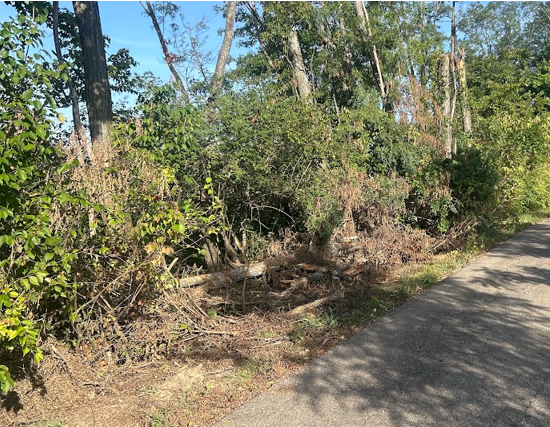
After arriving home from my visit to the Upper Peninsula of that state up north, I was greeted with abundant evidence of the derecho that swept through my local area. Our industry has an obligation to play a role in mitigating the extent of future disasters.
The woodland along the bike trail near me was ravaged. Numerous aged black locust trees (Robinia pseudoacacia) had broken, snapped, and fallen across the trail and adjoining wooded areas. I also saw many damaged common hackberries (Celtis occidentalis), broken Callery pears (Pyrus calleryana), and oaks (Quercus spp.) that had lost large sections of their crowns. Undoubtedly, this was only a small sampling of the damage caused by the severe windstorm, and I am sure many of you in other parts of Ohio can tell similar stories.
Seeing this kind of damage always causes me to take another look at two related topics: tree pruning techniques and tree risk assessment. The bike trail near my home is one I walk on a regular basis. I remember thinking just a few weeks ago that a number of the black locust trees looked quite senescent and were likely to fail within the next few years. I even thought that I should notify the township about them. Mother Nature took care of at least half of those trees for me.
Many of the tree failures we experience are foreseeable if a knowledgeable arborist is able to examine the tree before the storm arrives. That does not mean every failure can be predicted or prevented. Extreme weather will always exceed the capacity of some trees. However, storm events often reveal defects that were already present: codominant stems, narrow branch unions, included bark, overextended limbs, heavy end weight, decayed wood, poor taper, clustered scaffold branches, and declining or senescent trees growing in high-use areas.
I have written often about pruning techniques for young trees and the importance of structural pruning. We still have too many trees going into landscapes with codominant stems, extremely narrow bifurcations, and clustered branching. Those defects may look minor when the tree is young, but they become much more consequential as the tree gains size, weight, and exposure to wind. Whether you are a grower, garden center professional, landscaper, municipal manager, or arborist, you need to be familiar with the most current recommendations on pruning and young tree training.
Dr. Edward F. Gilman’s work, along with the work of other researchers and practitioners, clearly demonstrates the importance of developing and maintaining a strong central leader, subordinating competing leaders, subordinating branches with a high aspect ratio, and separating branch clusters. The University of Florida IFAS structural pruning guidance emphasizes pruning toward one dominant leader and using reduction cuts to suppress competing leaders rather than simply removing large portions of the crown. It also explains that reducing the relative diameter of a competing branch or stem improves aspect ratio over time, which strengthens the union and reduces the likelihood of failure.
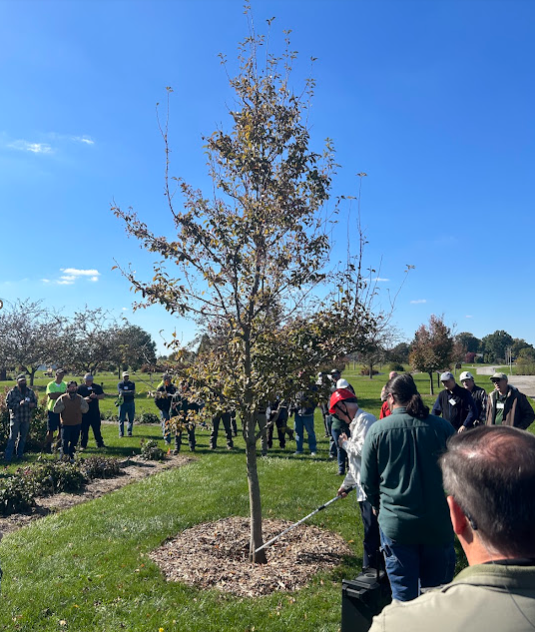
These structural improvements are most easily managed when the tree is young, when cuts are smaller and the tree can respond more effectively. However, they can still be managed on older trees in many situations. I have seen it done on trees that some might assume were too difficult to correct, including Japanese zelkova (Zelkova serrata) and elms (Ulmus spp.). I once watched Dr. Gilman walk up to a typically structured Japanese zelkova and a typically structured elm at Secrest Arboretum with trunk diameters of approximately 4-5 inches and multiple branch attachments clustered at one point on the trunks. By the time he was done, the tree had achieved single dominant leaders, subordinated competing leaders, and a much-improved branch arrangement. It can be done.
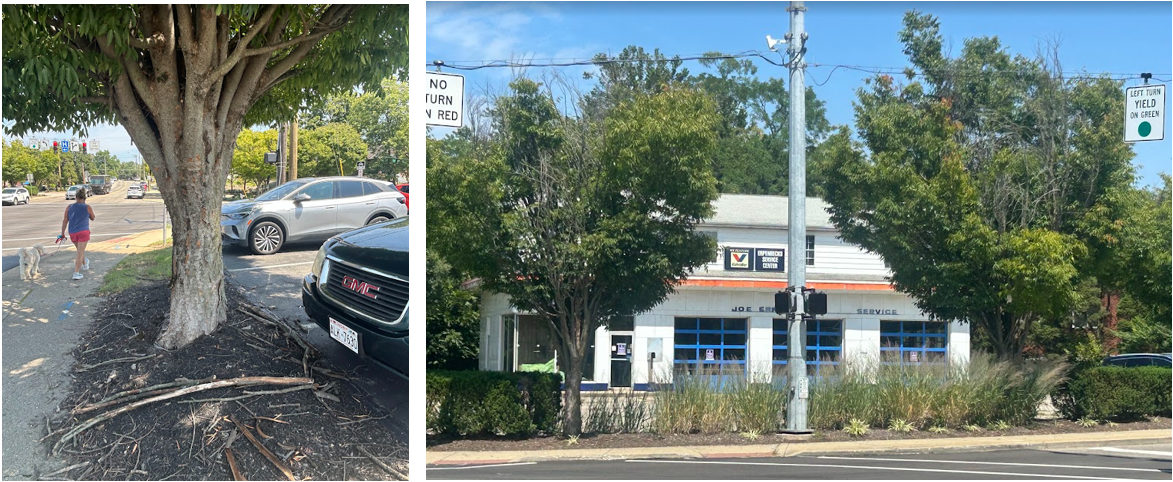
These Japanese zelkovas have clustering of at least a dozen branches on each tree, all clustered at the same point on the trunks, resulting in premature sectional die out in the tree canopies and unwanted dead limbs falling out onto the sidewalk and parking lot. This mess was avoidable if these trees had been structurally pruned in the nursery, at planting time, and after establishment.
Sometimes structural correction is more difficult than others. Sometimes it requires multiple pruning cycles rather than a single visit. Sometimes the goal is not perfection but meaningful risk reduction while preserving tree health and function. The important point is that structural pruning should be intentional. It should not be confused with indiscriminate thinning, topping, over-lifting, or simply removing interior foliage. Good structural pruning starts with a clear objective: select and protect the best leader, reduce or subordinate competing leaders, reduce end weight where appropriate, improve scaffold spacing, and retain enough live crown to support vigor and wound response.
Risk assessment deserves the same systematic approach. In high-use areas such as trails, parks, campuses, streetscapes, commercial landscapes, and residential properties, trees should be evaluated by qualified professionals who understand both tree biology and structural defects. A risk assessment should account for the likelihood of failure, the likelihood of impacting a target, and the consequences of that impact. It should also distinguish between defects that can be mitigated through pruning, support systems, site management, or monitoring and defects that warrant removal.
The derecho was a reminder that wind does not negotiate with weak structure. It tests every included bark union, every overextended limb, every oversized lateral branch, every decayed stem, and every aging tree that has been left without evaluation. The lesson for plant healthcare professionals is not simply that storms break trees. The lesson is that our recommendations before the storm matter. Nursery production practices matter. Garden center advice matters. Installation and establishment care matter. Early structural pruning matters. Periodic risk assessment matters.
If we are to provide the best advice and the best service to our customers and clients, we must continue to sharpen our understanding of pruning, tree structure, and risk. We should be teaching clients that a young tree with poor structure is not “fine for now”; it is a future problem that becomes more expensive and more dangerous with time. We should be advocating for structural pruning early, follow-up pruning at appropriate intervals, and professional risk assessment where people and property are likely targets. That way, when the next severe windstorm blows through Ohio, fewer clients are left with destroyed trees, damaged property, and preventable failures.